
SHOCKING NEWS: Novak Djokovic officially declares that he will NOT wear the LGBT rainbow symbol at the next major tournament!
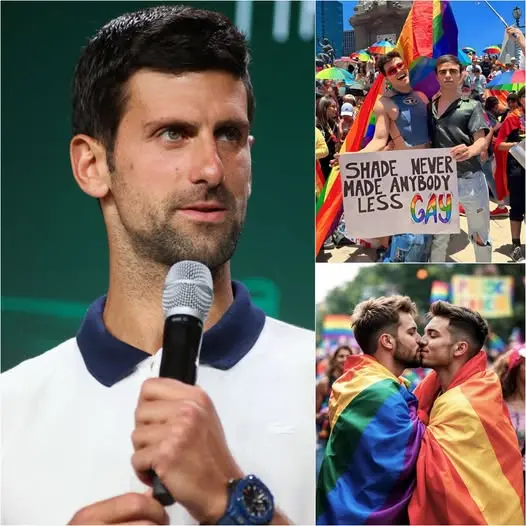
PARIS, MARCH 3, 2026 – The tennis world is in turmoil. Novak Djokovic, the Serbian champion with 24 Grand Slam titles, has stirred up controversy by publicly announcing that he will refuse to wear the LGBT rainbow symbol at the next major tournament, the 2026 Australian Open. This decision, described as “controversial” by some and “courageous” by others, has caused a shockwave on social media and in the international media.
Under pressure from the public and journalists, Djokovic explained himself with his characteristic candor: “Sport should focus on what really matters on the court – exquisite technique, top-level performances and fair results – and absolutely not on political or social movements!”
This statement, made during a virtual press conference from his training camp in Belgrade, was broadcast live on YouTube and quickly racked up millions of views. Shocked emojis and hashtags like #DjokovicAgainstLGBT and #TennisWithoutPolitics flooded Twitter (now X), dividing fans into two irreconcilable camps. On one side, LGBTQ+ rights advocates denounced a retrograde attitude; on the other, Djokovic supporters applauded his defense of the purity of the sport. But how did we get here? And what will the consequences be for world tennis?
The Context of an Explosive Decision
It all started a few weeks ago when the ATP (Association of Tennis Professionals) announced an initiative to promote inclusion at the 2026 Grand Slam tournaments. Inspired by similar campaigns in football and basketball, this measure stipulated that players wear a rainbow armband or badge during key matches as a sign of support for the LGBTQ+ community. The idea, supported by figures like Rafael Nadal and Serena Williams (retired but still influential), aimed to make tennis more inclusive, especially after past controversies surrounding homophobia in the sport.
Djokovic, known for his independent stances, was quick to react. In an Instagram post that garnered over 500,000 likes within hours, he expressed his reservations: “I respect everyone, but I don’t want my game to be exploited.” This cryptic statement ignited a firestorm. The media speculated, LGBTQ+ organizations called for clarification, and fans launched petitions. Under this pressure, Djokovic called a press conference to explain himself in detail.
“I’ve always believed that tennis is a sanctuary where only talent matters,” he said, looking directly into the camera. “Movements like this, while important in society, have no place on the court. Imagine if we imposed symbols for every cause: climate change, animal rights, global conflicts… Sport would become a political battleground, and that’s not why I train 10 hours a day.”
“His words, spoken with calm assurance, recalled his past stances, such as his refusal of the COVID-19 vaccine in 2022, which earned him exclusion from the Australian Open.
A Cascade of Reactions: From Anger to Admiration
The news came as a bombshell. Reactions poured in on social media. Billie Jean King, tennis legend and LGBTQ+ activist, tweeted: “Disappointing to see a champion like Djokovic ignore the importance of inclusion. Tennis is for everyone, not just winners.” Organizations like GLAAD (Gay & Lesbian Alliance Against Defamation) condemned the decision, accusing Djokovic of “perpetuating exclusion.” An online petition, launched by Australian fans, garnered over 100,000 signatures in 24 hours, calling on the ATP to sanction the player.
Among athletes, opinions are divided. Jannik Sinner, the young Italian often compared to Djokovic, declined to comment, but rumors are circulating about his own refusal of a rainbow bracelet at the 2026 Australian Open. Carlos Alcaraz, the rising Spanish star, took the opposite stance: “I will wear the symbol with pride. Sport unites people, regardless of their orientation.” Even among retired players, Andy Murray criticized Djokovic: “It’s a missed opportunity to show leadership.”
But Djokovic is not alone. Conservative voices, such as those of some Serbian and American commentators, support him. “Finally, someone who speaks the truth! Sport is not a platform for politics,” posted one fan on Reddit, where a dedicated subreddit has seen its traffic explode. In Serbia, national media outlets have praised his “patriotism” and “independence of spirit.” Even within the tennis world, anonymous players have told journalists that the ATP’s initiative makes them uneasy, fearing forced compliance.
Tournament organizers are in a bind. The Australian Open, scheduled to begin in January 2027 (but with preparations in 2026), issued a neutral statement: “We respect individual choices, but we encourage inclusion.” Sponsors like Nike and Lacoste, partners of Djokovic, have not yet reacted, but experts predict a potential public relations crisis. “If Djokovic persists, he risks losing contracts,” analyzes a sports marketing consultant. “But if he wins, his rebellious image could boost his popularity with a segment of the public.”
Djokovic: A Champion with Many Facets
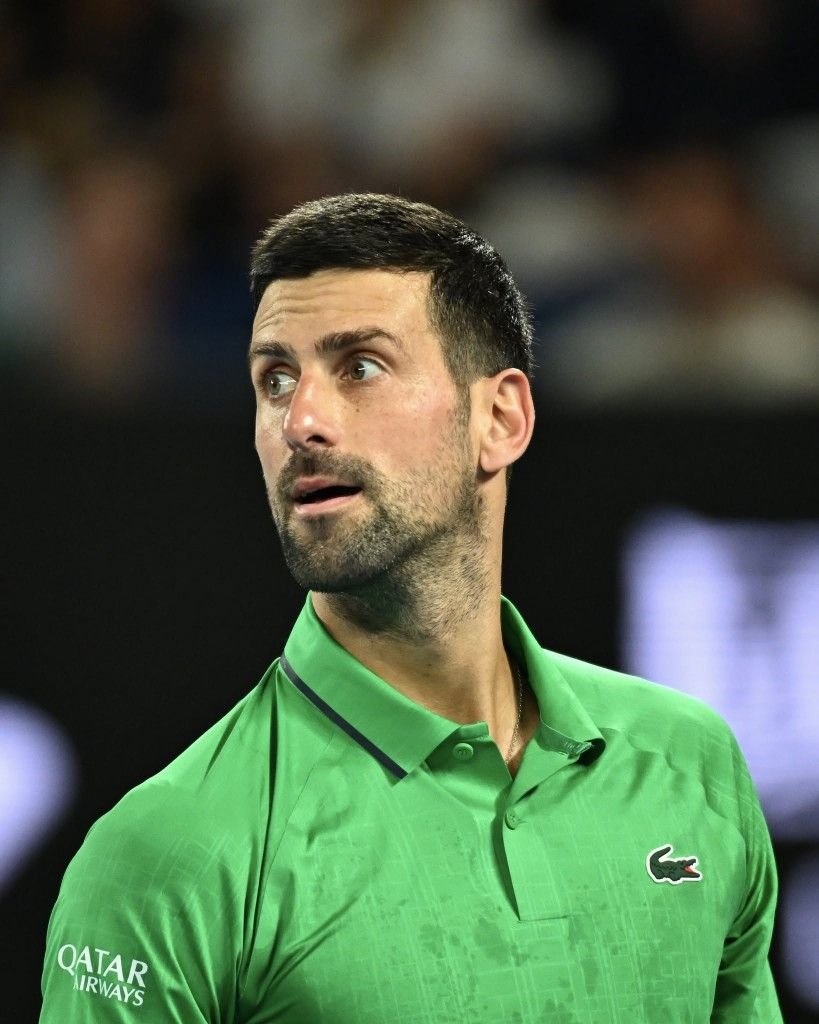
To understand this decision, we must delve into the career of Novak Djokovic, one of the greatest athletes of all time. Born in 1987 in Belgrade, in the midst of the Balkan War, Djokovic climbed the tennis ladder with fierce determination. Winner of 24 Grand Slam titles (tied with Margaret Court), two-time Olympic champion (including gold at Paris 2024), he holds unsurpassed records: more weeks as world number 1, more Masters 1000 titles won.
But Djokovic is more than just stats and trophies. He’s a man of strong convictions. A vegetarian turned vegan, a practitioner of meditation and yoga, he has often flirted with alternative theories – such as his skepticism about vaccines or his interest in spirituality. In 2022, his refusal to be vaccinated against COVID-19 transformed him into an anti-establishment icon for some, a pariah for others. Expelled from Australia, he bounced back by winning Wimbledon the same year.
Djokovic has rarely spoken out on social issues. He has supported humanitarian causes, such as aid to children in Serbia through his foundation, but has avoided political debates. “I’m an athlete, not a politician,” he often repeats. This LGBT issue could mark a turning point: is it a personal stance, influenced by his Serbian Orthodox upbringing, or a sincere defense of sporting neutrality?
The Impact on Tennis and Society
This controversy raises broader questions. Should sport be apolitical? Historically, no: from the 1936 Berlin Olympics to the boycotts of the 1980s, and including Colin Kaepernick’s kneeling protest, sport has always been a mirror of society. In tennis, pioneers like Arthur Ashe and Martina Navratilova fought for civil and LGBTQ+ rights.
Critics argue that Djokovic’s refusal perpetuates the invisibility of minorities. “In a sport still marked by homophobia, this symbol is crucial,” argues an activist from Stonewall Sports. On the other hand, athletes like Djokovic argue that forcing symbols creates unnecessary divisions. “True inclusion comes from mutual respect, not badges,” commented a former player.
With the 2026 Australian Open approaching, the ATP may reconsider its policy. Internal discussions suggest a voluntary approach to avoid a schism. But the damage is done: tennis, often seen as elitist and conservative, finds itself at the heart of a societal debate.
Conclusion: A Victory for Debate?
Novak Djokovic, at 38, continues to dominate the circuit – with a recent victory at Indian Wells in February 2026. His decision regarding the rainbow symbol could tarnish his legacy for some, or strengthen it for others. One thing is certain: it forces the sports world to reflect. Should we separate the athlete from the man? The playing field from society?
While fans await his next forehands, one question lingers: Will Djokovic win this off-court battle? Only time will tell. In the meantime, tennis has never been so political… or so captivating.